Open, build, reset
Choose wide openings and trays that can come out. Keep sorting broad—active projects, wheels, minifigures—so resetting stays faster than sorting every brick.
Look first: TROFAST, LEGO Storage Bricks, SAMLAOne open bin for the active builds? Drawers for the little parts you keep hunting for? A dust-aware home for finished models? This field guide compares real storage systems by the job they do, with direct links to the makers and independent sorting advice.
A shared-collection reference by Sposable. Independent guide—not affiliated with or endorsed by LEGO, IKEA, or the listed makers. Prices and inventory change; no live stock data here.
Storage that makes a collection easy to use is better than storage that just looks tidy. Begin with the moment that causes the most friction—clean-up, finding one element, carrying a project, or showing it off.
It is fine to use more than one kind. Many households do best with a generous play bin for active pieces, a few small drawers for frequently searched parts, and a separate shelf or case for completed models.
Choose wide openings and trays that can come out. Keep sorting broad—active projects, wheels, minifigures—so resetting stays faster than sorting every brick.
Look first: TROFAST, LEGO Storage Bricks, SAMLASmall clear drawers or divided cases help once a collection has enough repeated elements to justify labels. Sort first by part family; add color only when a drawer becomes crowded.
Look first: IRIS, Akro-Mils, NOJIGA latching case keeps a project contained between sessions or moves it between your work surfaces. Check compartment depth and latch security; tiny loose parts can still migrate if dividers do not meet the lid.
Look first: LEGO Sorting Case, ArtBin, StanleyUse shelves for larger builds and a dedicated clear case for models or minifigures that need dust protection. Verify internal dimensions against the assembled model.
Look first: KALLAX, RUDSTA, Wicked BrickThese are useful first stops, not a ranking for every home. Compare the shape of the problem, then check exact size and configuration at the linked maker.
Product images below come from the linked manufacturers or retailers. The notes are editorial comparisons; availability and product ranges can change.
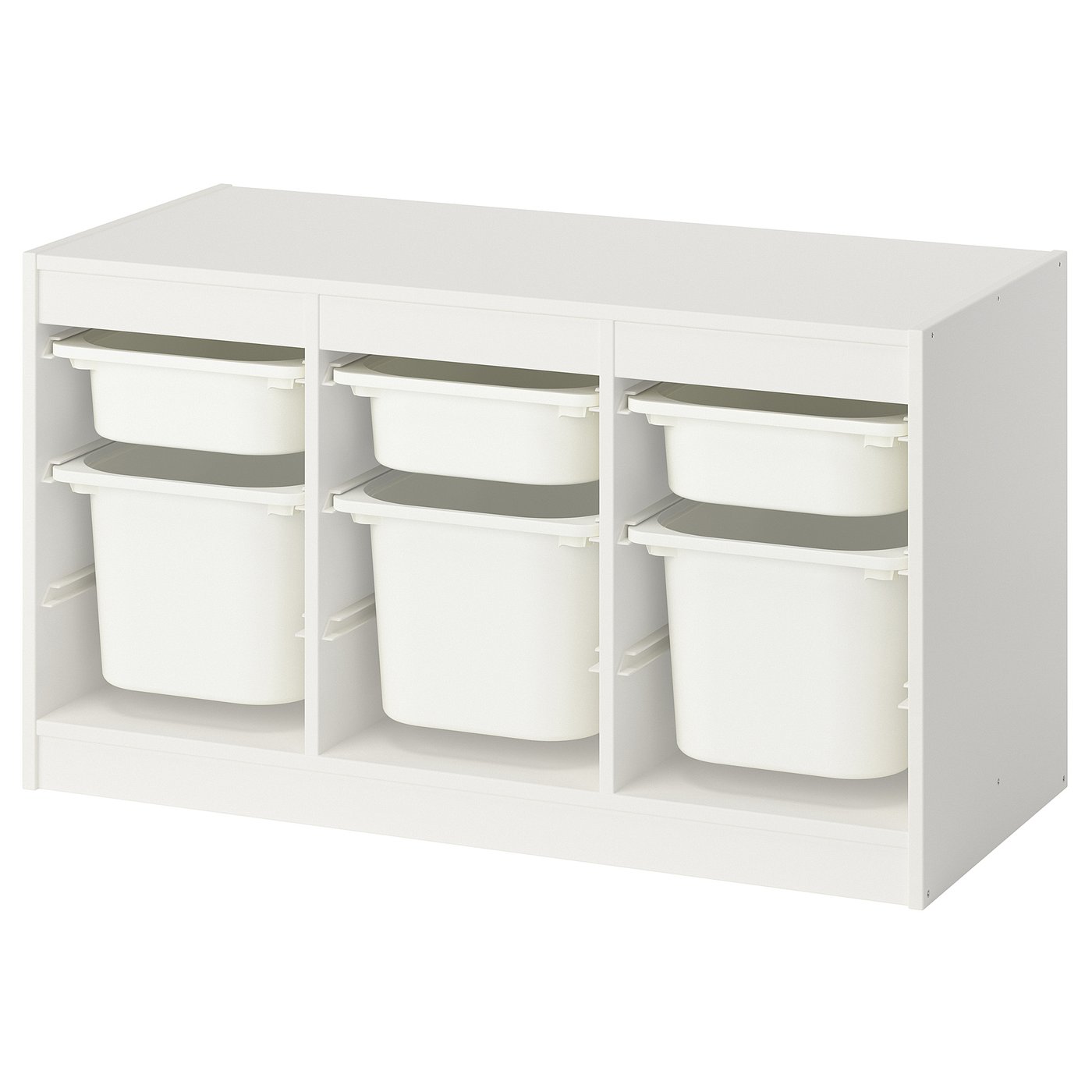
IKEA TROFAST is an accessible starting point for mixed-size bricks and shared builds. The frame gives the room a defined footprint; removable bins bring the work to the floor or table. Use shallow bins for current projects and deeper ones for bulky pieces.
Also compare the white frame and shallow 16½ × 11¾ × 4 in bin; verify frame/bin compatibility.
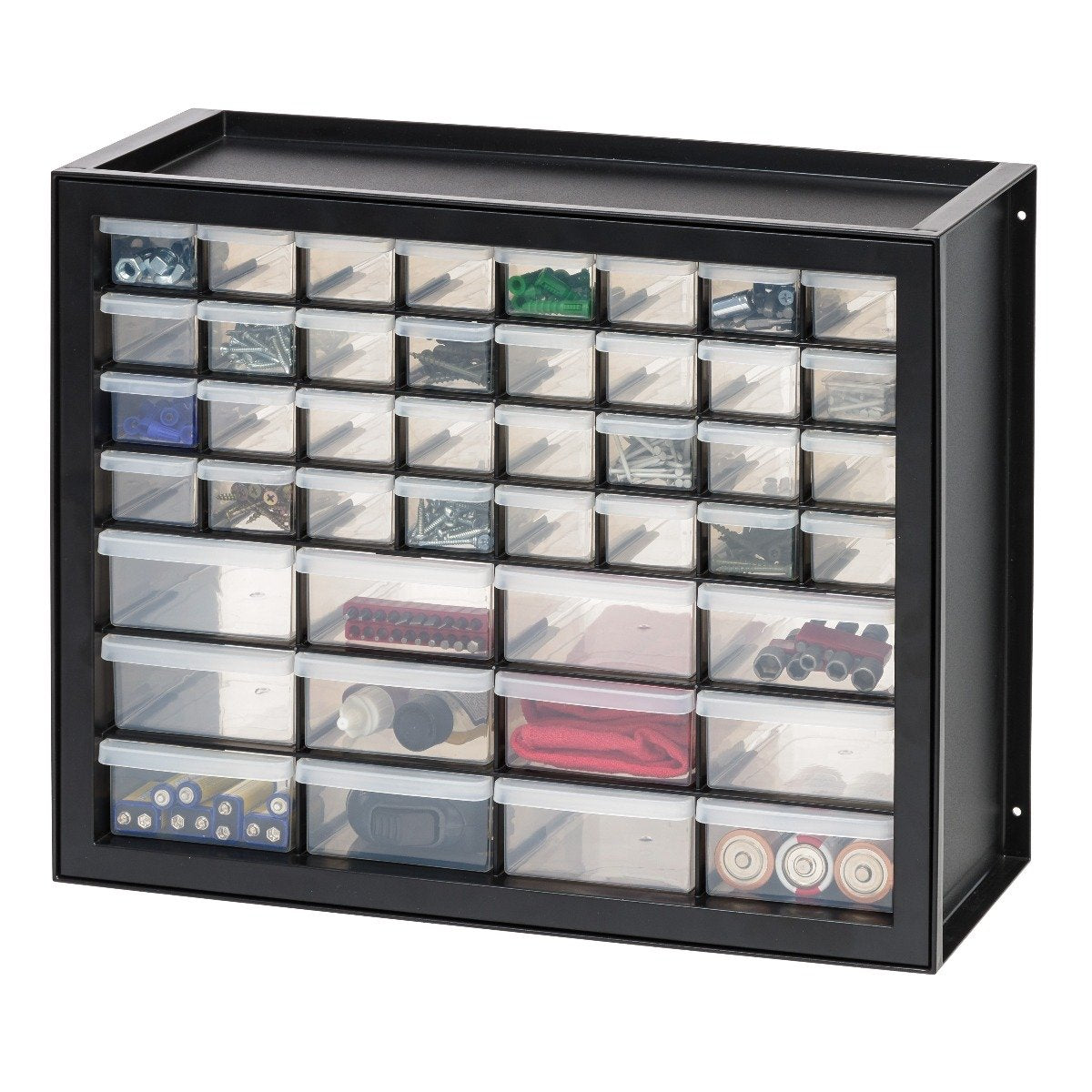
Clear-front parts cabinets let you see broad categories at a glance, and the IRIS family comes in 16-, 26-, and 44-drawer configurations. Akro-Mils is another long-running small-parts line with a 44-drawer cabinet. Start with the smallest count that leaves room for growth; group by part shape before splitting into more drawers.
Compare Akro-Mils 44 drawer (listed dimensions 20 × 6.375 × 15.87 in) and the Container Store craft cabinet.
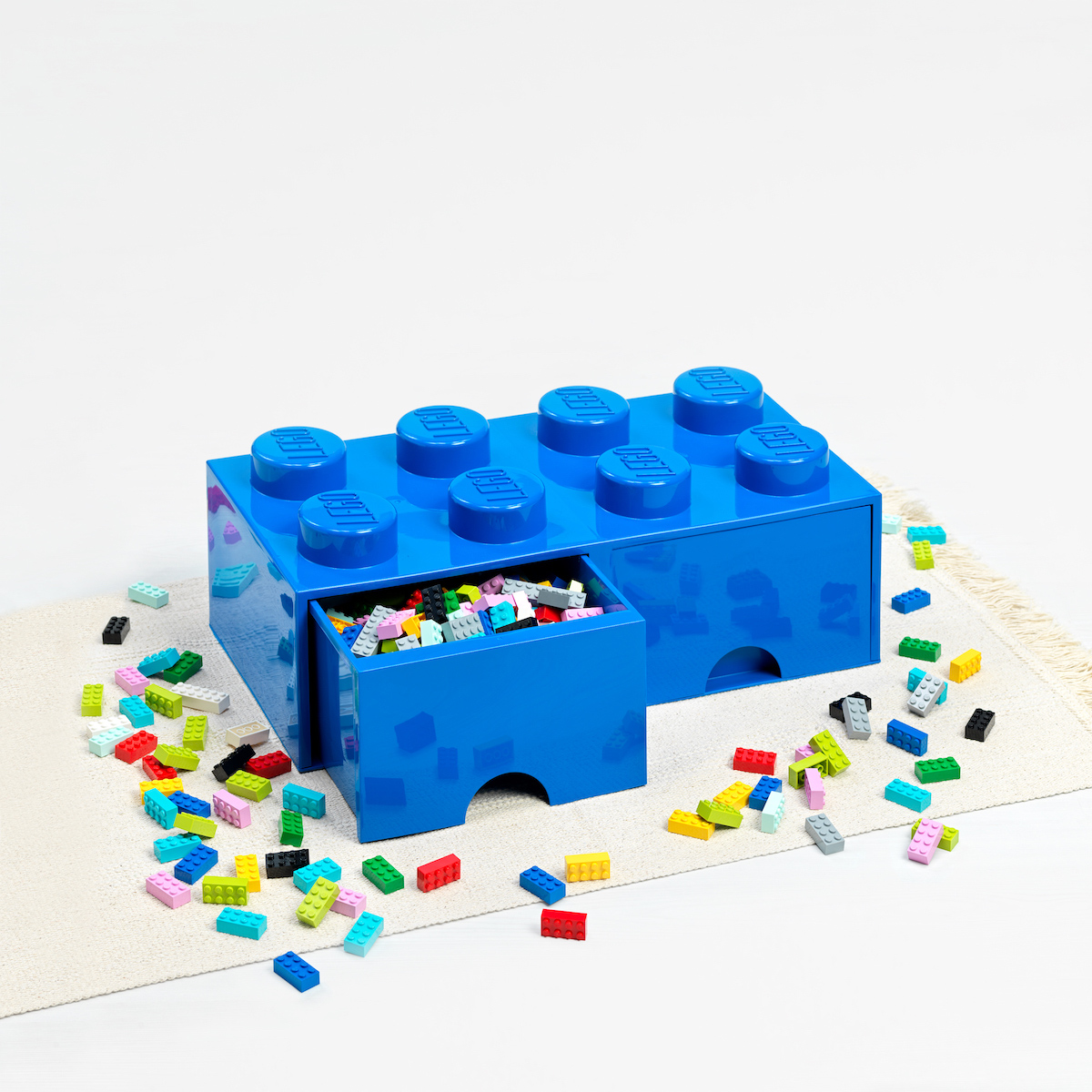
The official LEGO Sorting Case To Go and craft organizers such as ArtBin Super Satchel or Stanley FATMAX give a project a portable boundary. Their internal layouts differ—some use fixed sections, some removable cups. A LEGO-themed ROOM COPENHAGEN brick drawer gives a stationary project its own recognizable home, rather than a carry case.
Browse ROOM COPENHAGEN drawers, ArtBin Super Satchel, or Stanley FATMAX 11-compartment organizer.
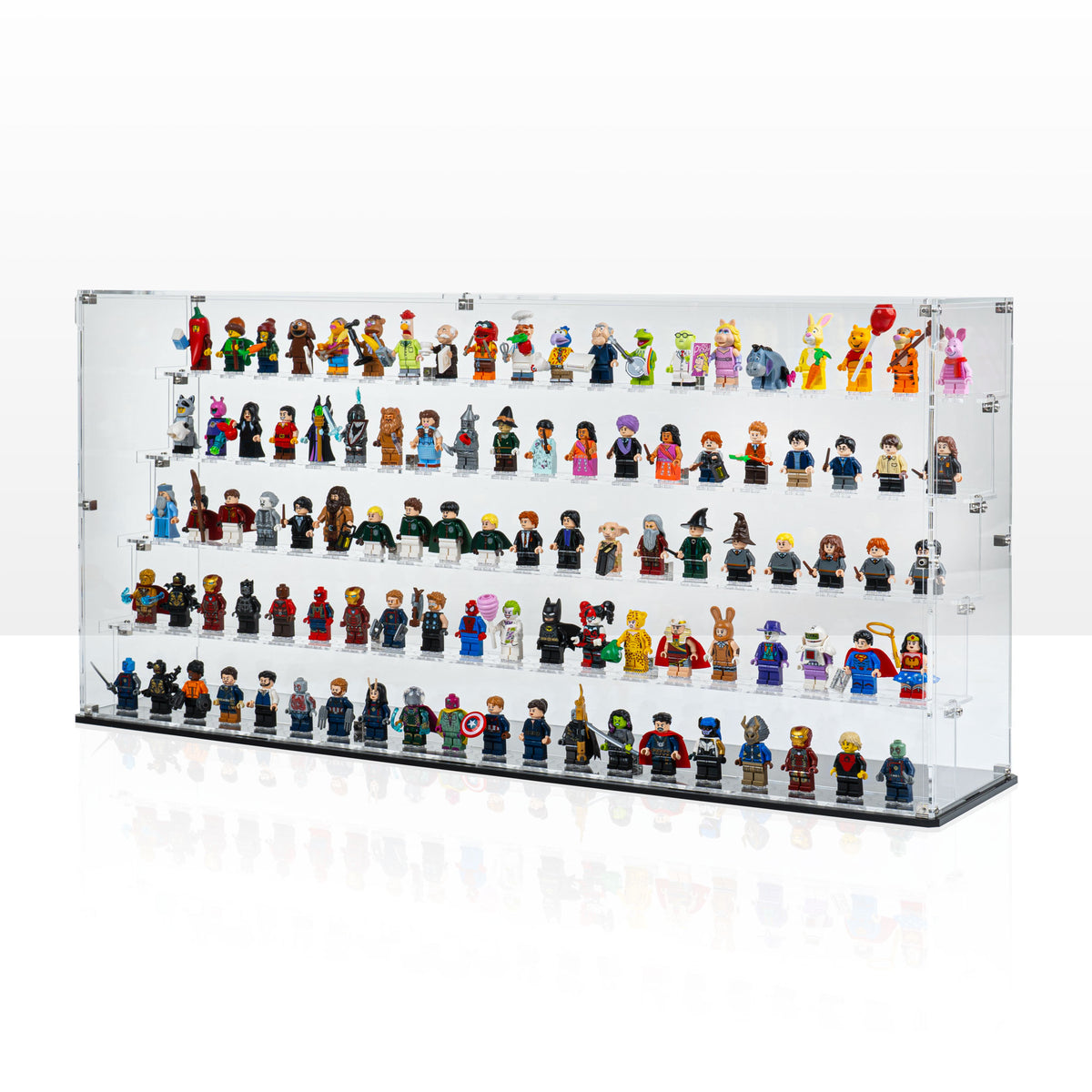
Bookshelves and glass-door cabinets give larger models room; purpose-built acrylic cases fit a particular model or line of minifigures. Wicked Brick and iDisplayit organize their catalogs around LEGO sets and figures. Match the model number or check the case’s interior measurements before ordering.
Also compare IKEA RUDSTA, KALLAX, and iDisplayit modular-building display.
Trying to make one container do both usually makes either clean-up or viewing harder. If floor space is tight, keep the active-play bin low and reserve the higher shelf for models you want left assembled.
More compartments are not automatically more organized. A good system saves enough search time to repay its sorting and upkeep.
A practical progression—from all mixed together, through sets and broad groups, toward part-specific storage—lets the organizer grow with the collection. Color-only sorting can be easy at first, but it spreads different shapes together and may make a specific element harder to spot.
Start by dividing only the parts you repeatedly hunt for. Label the drawer face with words or a part picture; transparent plastic alone does not tell a future helper where the piece belongs. Leave empty drawers for new finds rather than reorganizing the whole cabinet every month.
Part family first; add color or element number only when it reduces a real search. Brick Architect publishes printable labels and a detailed collection-size guide.
Open label library ↗A single bin, a few broad containers, and a large searchable collection have different organizing costs. Do not buy a workshop cabinet for a handful of current sets.
Read the collection-size guide ↗Rebuilding complete sets is easier when pieces, manuals, and unique elements have a common labeled home. Consider bags inside larger containers for sets used less often.
LEGO sorting & storage advice ↗Keep a small tray of everyday pieces open beside the work surface, and put reserve stock in labeled drawers. The active bin can be broad without sacrificing findability for the whole collection.
Medium-collection ideas ↗Branded storage, off-the-shelf organizers, furniture, and specialist display. Each entry links to a maker or retailer page so you can confirm today’s dimensions, colors, configurations, availability, and terms.
No ranking can fit every collection. Use the short notes to narrow the field, then check the product page before buying—especially for frame compatibility, internal clearance, latching lids, and model-specific display fit.
Showing every listed option.
No products match that search. Try a maker, storage type, or a broader word.
Recognizable brick forms, drawers, and cases from LEGO or its licensed storage partner.
Useful when the collection shares space with crafts, toys, or the rest of the room.
Workshop and craft organizers—often a better fit for specific LEGO elements than toys.
For a single work-in-progress, a club night, or a project that moves between rooms.
Dedicated cases when the point is viewing the build, not storing loose pieces.
Compare inside dimensions with the biggest brick group, minifigure accessories, or assembled model—not just the outside of the case.
Check whether inserts lift out, dividers reach the lid, and trays can be replaced. A snap lid does not guarantee tiny pieces stay separated.
Ranges, colors, dimensions, and availability shift. This page links to sources but does not track stock or promise a current price.
Product dimensions and features are best confirmed at the linked manufacturer or retailer. These independent and official references explain the broader sorting and storage choices.
This is an independent, editorial reference—not a storefront, buying guarantee, or LEGO®, IKEA®, IRIS®, or other manufacturer endorsement. Linked images and product names identify the products discussed; product imagery is credited to its source. No affiliate relationship is represented. Prices and stock are intentionally omitted because they change. Follow the source links for current product details, shipping, mounting instructions, and availability. LEGO is a trademark of the LEGO Group, which does not sponsor or endorse this site.